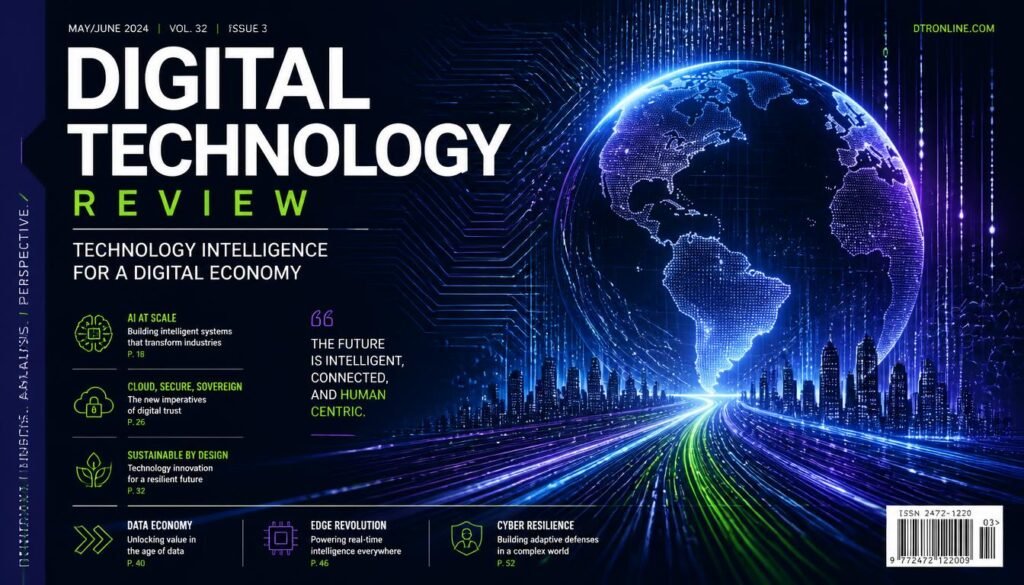
Digital Technology Review is an independent technology publication focused on the software, artificial intelligence, infrastructure, data and digital strategies shaping modern organisations.
Our purpose is straightforward: to make complex developments in technology easier to understand while providing readers with useful, informed and commercially relevant perspectives on the technologies transforming the digital economy.
Technology is no longer confined to IT departments. Software influences almost every aspect of modern business. Artificial intelligence is changing how organisations develop products, automate processes and manage information. Cloud infrastructure supports critical applications and services. Data increasingly influences strategic decisions. Digital transformation is changing how organisations operate, compete and serve their customers.
Emerging deep-tech breakthroughs from generative AI algorithms to quantum computing modules—continue to reshape enterprise priorities, as regularly highlighted by MIT Technology Review
Digital Technology Review examines these developments through six interconnected editorial pillars: Software Engineering & Development; AI, Machine Learning & Intelligent Technology; Enterprise Software & Digital Platforms; Cloud Computing, DevOps & IT Infrastructure; Data, Analytics & Business Intelligence; and Digital Transformation & Technology Strategy.
Explore tools, trends, and strategies reshaping the modern tech landscape to keep agency leaders, developers, and founders ahead of the curve. Dive into our latest deep dives and expert analysis by visiting the Digital Technology Review Blog
Why Digital Technology Review Exists
The technology industry produces an extraordinary volume of information.
Every day brings new software releases, artificial intelligence announcements, cloud services, development tools, enterprise platforms, data technologies and digital strategies. For technology professionals and business leaders, keeping track of these developments can be difficult.
Information is plentiful. Useful technology intelligence is considerably harder to find.
Digital Technology Review was established around the principle that technology coverage should provide more than a stream of announcements.
Our editorial approach is focused on context.
We seek to examine how technologies work, where they can be applied, what opportunities they create, what limitations organisations should consider and how they fit within the broader technology ecosystem.
This means our coverage can range from highly technical subjects in software engineering and cloud infrastructure to strategic questions surrounding digital transformation and enterprise technology investment.
Our Editorial Mission
Our mission is to provide clear, independent and useful technology intelligence for the digital economy.
We aim to connect technical developments with their wider organisational implications.
For developers and engineers, that can mean exploring software architecture, development practices and emerging engineering technologies.
For technology executives, it can mean examining enterprise applications, infrastructure, AI adoption and technology strategy.
For business leaders, it can mean understanding how digital technologies can influence operations, products, customer experiences and competitive positioning.
For technology companies and industry professionals, it provides a platform for sharing informed perspectives on developments within their areas of expertise.
Our objective is not to suggest that every new technology is transformational. Instead, we aim to provide sufficient context for readers to assess technological developments critically.
Our Six Editorial Pillars
Software Engineering & Development
Software engineering is fundamental to the modern digital economy.
Our coverage examines application development, software architecture, programming, web development, APIs, frameworks, testing, developer tools and engineering practices.
We also explore how development teams are responding to changing technologies, including artificial intelligence and increasingly automated development environments.
AI, Machine Learning & Intelligent Technology
Artificial intelligence is rapidly becoming part of the technology infrastructure of modern organisations.
Digital Technology Review covers generative AI, machine learning, AI agents, enterprise AI, intelligent automation, AI development and related technologies.
Our approach focuses on practical implications rather than technological hype. We examine implementation considerations, opportunities, limitations, organisational impact and the evolving relationship between AI and enterprise technology.
Enterprise Software & Digital Platforms
Modern organisations rely on extensive software ecosystems.
This pillar examines enterprise applications, SaaS, CRM, ERP, workflow platforms, automation systems, digital platforms and business software.
We explore how organisations select, implement, integrate and manage technology platforms and how enterprise software continues to evolve.
Cloud Computing, DevOps & IT Infrastructure
Cloud infrastructure and modern IT practices underpin much of today’s digital economy.
Our coverage includes cloud computing, cloud architecture, cloud migration, DevOps, containers, Kubernetes, infrastructure automation, hybrid cloud, multi-cloud and data-centre technologies.
The focus is on understanding the architecture and strategic decisions behind modern digital infrastructure.
Data, Analytics & Business Intelligence
Data has become a critical organisational resource.
Digital Technology Review examines data engineering, analytics, business intelligence, data platforms, data visualisation, predictive analytics and data strategy.
Our coverage considers how organisations can transform increasingly complex data environments into useful information and better decision-making.
Digital Transformation & Technology Strategy
Technology adoption without strategic direction can create unnecessary complexity and expenditure.
Our final pillar examines digital transformation, technology strategy, IT leadership, enterprise architecture, technology modernisation, digital innovation and technology investment.
We consider the organisational issues that accompany technological change, including legacy systems, adoption, transformation programmes and changing digital operating models.
An Editorial Perspective Across Technology
One of the characteristics that distinguishes Digital Technology Review is the relationship between our editorial pillars.
Technology disciplines increasingly overlap.
Artificial intelligence depends upon software and infrastructure. Enterprise applications depend upon cloud environments and data. Digital transformation depends upon technology architecture, software and organisational strategy.
Consequently, technology should not always be considered as a collection of isolated categories.
Our editorial structure reflects this interconnected environment.
An article examining enterprise AI, for example, may involve software development, cloud infrastructure, data architecture and organisational strategy.
This cross-disciplinary perspective allows readers to understand not only individual technologies but also how they interact within larger digital ecosystems.
Our Approach to Technology Content
We believe strong technology content should satisfy several principles.
Clarity
Technical subjects can be complicated. Good technology journalism and analysis should make difficult concepts understandable without sacrificing important detail.
Substance
Articles should provide meaningful information rather than simply repeating generic observations.
Context
Technology developments need context. A new platform, framework or AI capability is more useful to understand when its practical implications are explained.
Balance
Technologies have advantages and limitations. Our content aims to recognise both.
Relevance
Technology coverage should answer questions that matter to professionals, organisations and decision-makers.
Long-Term Value
Where appropriate, we aim to produce evergreen resources that remain useful beyond the immediate news cycle.
Independence
Digital Technology Review is intended to operate as an independent publication.
Our editorial objective is to serve readers by providing useful information and informed perspectives on technology.
We may discuss companies, software products, technology platforms and services, but inclusion does not automatically constitute endorsement.
Similarly, external contributions may provide valuable expertise and industry perspectives, but contributors’ opinions do not necessarily represent the views of Digital Technology Review.
We seek to maintain a clear distinction between useful editorial content and promotional material.
Contributions & Industry Expertise
Technology is an industry built on specialist knowledge.
Developers, engineers, architects, technology executives, consultants, researchers, product specialists and other professionals possess expertise that can contribute meaningfully to technology publishing.
Digital Technology Review welcomes relevant contributions that add genuine value for readers.
We are particularly interested in original analysis, practical guides, technical perspectives, strategic commentary and informed examinations of developments within our six editorial pillars.
Contributors should provide substantive information rather than simply using an article as a vehicle for promotional messaging or link placement.
Editorial acceptance is determined by relevance, quality and suitability for our audience.
Our Readers
Digital Technology Review is intended for a broad but professionally focused technology audience.
Our readers may include:
- Software developers and engineers
- IT professionals
- Technology architects
- Technology executives
- CIOs and technology leaders
- Data and analytics professionals
- Product and digital teams
- Business leaders
- Entrepreneurs
- Technology consultants
- Enterprise software professionals
- Digital transformation specialists
We aim to write for informed readers without assuming that every reader has the same technical background.
Looking at the Future of Technology
The technology industry is entering a period of significant structural change.
Artificial intelligence is becoming embedded within software. Cloud environments continue to evolve. Enterprise applications are becoming increasingly interconnected. Data is becoming more strategically important. Development practices are changing rapidly.
At the same time, organisations must determine which technologies genuinely create value and which simply introduce additional complexity.
Digital Technology Review will continue to examine these developments as they evolve.
Our interest is not limited to predicting the next major technology trend. We are equally interested in understanding the practical consequences of technologies once they move from experimentation into everyday use.
A Publication Built Around Technology Intelligence
Digital Technology Review is ultimately about understanding technology in context.
The software used by an organisation is connected to its infrastructure. Its infrastructure is connected to its data. Its data increasingly supports artificial intelligence. AI and software increasingly influence business processes. Those technologies collectively contribute to broader digital transformation.
Understanding these connections is becoming increasingly important.
Our goal is to provide readers with a reliable destination for exploring those relationships and understanding the technologies shaping modern organisations.
Our Commitment to Readers
Digital Technology Review will continue to develop its coverage as the technology landscape changes.
We aim to publish material that is informative, technically credible, commercially relevant and useful to professionals navigating digital change.
We recognise that technology information can influence important purchasing, development and strategic decisions. Readers should therefore apply their own professional judgement and conduct appropriate due diligence before acting on information published on this website.
Where technical, legal, financial, regulatory or other specialist advice is required, readers should consult an appropriately qualified professional.
About the Publisher
Digital Technology Review is an independent editorial publication created to provide technology-focused analysis and information across software, artificial intelligence, enterprise platforms, cloud infrastructure, data and digital transformation.
The publication’s editorial identity is deliberately broader than a conventional technology news site. Our objective is to explore the technology ecosystem from multiple perspectives while maintaining a clear focus on professional and organisational applications.
We believe the best technology publishing combines technical understanding with strategic context.
That principle informs everything we publish.
About Digital Technology Review – Our Vision
Our vision is to establish Digital Technology Review as a respected source of technology intelligence for professionals and organisations navigating the digital economy.
As technologies continue to converge, the need for clear, contextual and independent technology information will only increase.
Digital Technology Review intends to contribute to that conversation by examining the technologies, platforms, engineering practices and strategies that are shaping the next generation of digital organisations.
Digital Technology Review
Software, AI & Enterprise Technology Intelligence